Bosch Washer Maintenance: How Technicians Diagnose Faults First
With Bosch washing machine maintenance, the difference between a technician who replaces parts by trial and error and one who diagnoses the fault correctly can make a major difference in both time and repair cost. A washing machine can show the same symptom for several different reasons, so real diagnosis should never begin with statements such as “it is definitely the pump” or “it is probably the motor.” It should begin by collecting symptoms, understanding the exact stage where the program stops, and testing each possibility in a logical sequence. In this article, we explain Bosch washing machine maintenance from a different technical angle: how inspection begins, which checks should be carried out before repair, and how a technician rules out healthy parts until the real cause becomes clear instead of replacing components without proper evidence.
Bosch Washing Machine Maintenance

Professional Bosch washing machine maintenance should begin with diagnosis before any part of the appliance is dismantled. When the technician first arrives, the correct approach is not to immediately reach for tools. The first step should be listening carefully to the description of the problem and asking about its history. When did it begin? Does it happen during every cycle? Does the washer start and then stop? Does water remain inside the drum? Does the door stay locked? Has an error code appeared? Did the problem happen suddenly or develop gradually? These questions are not simply introductory conversation. They help organize the possible causes before any measurements or dismantling begin.
If operation is safe, the technician should then observe the washing machine while it is running. This is where experience becomes particularly useful because the goal is to watch the sequence of the cycle rather than focusing only on the final symptom. For example, if the customer says that clothes come out wet, the technician should not immediately assume that the motor is weak. The first checks should confirm that water drained completely, the load is reasonably balanced, and the program actually reached the spin stage. Only after these conditions are confirmed does it make sense to test the movement system if necessary. In the same way, a washer that does not start may have a door-lock condition, another incomplete operating requirement, or a power issue rather than a control-board fault.
After observing the cycle, the technician can divide the washing machine into separate functions or systems: water intake, door locking, movement, drainage, sensors, and control. Every test either removes a possibility from the list or makes that possibility stronger. This is the value of organized diagnosis. Instead of replacing three parts just to see what happens, the technician tests three functions and replaces only the component that has actually been shown to be faulty. From a pricing point of view, this is also better for the customer because the final repair cost becomes connected to a confirmed cause rather than an assumption.
-
The technician should begin by collecting details about the fault and when it appears because understanding the sequence helps reduce the number of possibilities before the machine is opened or measuring tools are used
-
Running the washing machine and observing the real cycle provides stronger information than inspecting it while switched off because some faults only appear when the appliance moves from one stage to another
-
Dividing the washer into functions such as water intake locking movement drainage sensors and control makes diagnosis logical instead of treating the appliance as one unknown unit
-
No repair should be recommended until there is evidence connecting the fault to a particular component because the real value of maintenance is reducing guesswork and avoiding unnecessary replacement of healthy parts
Diagnosing Bosch Washing Machine Faults
Diagnosing Bosch washing machine faults depends on systematic elimination. In other words, the technician should not begin by asking, “Which part is broken?” but instead ask, “Which possible causes could create this symptom, and how can each one be ruled out?” This approach is extremely important because many washing machine faults can produce very similar final symptoms. A clear example is a washer that does not spin. The cause might be incomplete drainage, an unbalanced load, a door lock that did not provide the correct signal, or a fault in the movement system. If the technician jumps directly to the motor, an expensive part could be replaced while the actual problem remains unchanged.
The technician normally begins with simple indicators that do not require major dismantling. These include error codes if present, the sound of the door lock, water intake, drum movement, drainage timing, and whether the washer attempts to move to the next stage or simply stops without response. After these observations, measurements can be used where necessary. If the problem involves drainage, the technician checks the water path, pump sound, and pump response. If the problem involves drum movement, the conditions required before movement should be reviewed first, followed by testing of the motor system when justified. If the complaint involves a door that does not lock or does not open, mechanical problems in the lock should be separated from electrical signals or control issues.
An error code should never automatically be treated as a final diagnosis. An error code usually identifies a direction or function that needs inspection, but it does not always mean one specific component must be replaced. A specialist connects the code with the washer’s behavior and the test results. If the code disappears after restarting but returns again under the same operating conditions, that is especially valuable information because it shows that the fault is recurring rather than being a one-time event.
Strong diagnosis should ultimately be explainable. The technician should be able to tell you: “We ruled this out because the test result was normal, then we checked this function and found this result, which is why the most likely cause is this particular component.” When the diagnosis can be explained in that sequence, the repair decision is based on inspection rather than instinct.
-
The visible symptom should be treated as the starting point of diagnosis rather than as the name of the fault because the same symptom can result from several different functions
-
Error codes help direct the inspection but should not be used as sufficient evidence to replace a component before the related function has been tested
-
Every successful test removes one possible cause from the list and reduces the chance of replacing a part that is not actually faulty
-
Professional diagnosis should be explainable to the customer so they understand what was ruled out what was confirmed and why the repair was recommended
Inspecting a Bosch Washing Machine Before Repair

A proper Bosch washing machine inspection before repair is one of the most important steps if you want to avoid random part replacement. A good inspection begins from the outside before moving inside the appliance. The technician should review visible electrical connections, the water tap, hose position, washer level, and the door. The reason is simple: some symptoms that look like internal faults may actually come from installation or connection problems. A compressed drain hose can restrict drainage, a partially opened water tap can extend the program, and an uneven floor can cause severe vibration during spinning. If these conditions are ignored, the technician may start dismantling internal parts that are actually working normally.
After the external check, an appropriate program should be started so the technician can observe the operating sequence. The important point is identifying the exact moment where the washer’s response changes. Does the door lock? Does water enter at a normal rate? Does the drum begin moving? Does the pump operate? Does the washing machine move from washing to rinsing and then spinning? These steps create a map of the fault. Every stage that works normally suggests that part of the system is probably functioning correctly, while the first stage that fails gives the technician a more focused area for measurement.
The next step is technical testing based on the symptom. The door lock, pump, sensor, motor, or control board may need inspection, but not all of them at once. The technician should begin with the component closest to the observed problem and then connect that result to the rest of the cycle. It is also important that measurements are made under appropriate conditions because some components may appear normal when disconnected but fail under load or during actual operation. This is why testing the washer during a real cycle can sometimes be more informative than checking a component in isolation.
Before any repair begins, the technician should be able to give you three clear points: the most likely cause, the test that supports that diagnosis, and the repair that is actually required. If these three points are not clear, replacing a component may be premature. Inspection before repair is not an unnecessary extra step. It is the step that prevents you from paying twice for the same unresolved fault.
-
Inspection should begin with external connections and installation conditions because some water drainage and vibration problems are caused by setup rather than an internal component
-
Observing a real operating cycle helps identify the exact moment the washer fails instead of relying on a broad description that may hide important details
-
Internal tests should be selected according to the symptom rather than performed as a fixed checklist because every measurement should have a clear reason
-
Before approving any repair you should understand the suspected cause the test that confirmed it and the work required because these three points form the basis of a trustworthy repair
Testing the Bosch Washing Machine Motor
Testing the Bosch washing machine motor should not begin simply because the drum did not turn or because spinning became weaker. The motor is part of a larger system, and it cannot be judged from the visible symptom alone. The first question is whether the washer actually reached the stage where a movement command should have been issued. If the door did not lock properly, the water level was not reached, or drainage did not finish, the program may prevent rotation even when the motor is completely healthy. That is why all operating conditions that allow motor movement should be checked before the motor itself becomes the main suspect.
Once the operating sequence has been confirmed, the technician should identify the exact type of movement problem. Does the motor fail to move at all? Does it start and then stop? Does the drum rotate during washing but fail to reach high speed during spinning? Each pattern has a different meaning. If the washer moves normally during washing, that already proves that the movement system can function under at least some conditions. The next question is why it fails at a different speed or load. If the washer makes an attempted movement sound while the drum remains still, the technician must distinguish between a mechanical restriction and an electrical or motor-related weakness.
A specialist uses the correct measurements for the model and evaluates the motor response during actual operation instead of relying only on visual inspection. Components related to motor control may also need testing when the situation justifies it. This testing should always be performed safely because direct access to internal electrical connections is not appropriate for the user. If a fault is confirmed, the technician should then determine whether the problem is in the motor itself or in a component responsible for controlling or powering it before replacement is considered.
After the repair, the final test should be carried out under a real load. An empty drum may spin perfectly, but what matters is whether the washer can wash and spin a normal load without stopping, weakening, or producing unusual sounds.
-
The motor should not be blamed before confirming that the washer actually reached the movement stage because door water and drainage conditions may prevent the rotation command
-
Distinguish complete movement failure from failure only at high speed because movement during one stage and failure during another changes the diagnosis significantly
-
Motor testing should include response under load rather than only checking the empty drum because some problems only appear during washing or spinning
-
If motor replacement is suggested ask whether motor-control components were ruled out because the problem may be in the system that operates the motor rather than in the motor itself
Checking a Bosch Washing Machine Sensor
A proper Bosch washing machine sensor inspection requires understanding that the washer depends on information from several sensors to know how and when to continue the cycle. Sensors may be related to water level, temperature, door status, or other functions depending on the specific model. An unreasonable sensor reading can cause the program to stop, become longer, or move incorrectly to another stage. However, the presence of a symptom does not automatically prove that the sensor itself has failed. The problem may involve wiring, the condition being measured, or the way the signal reaches the control system.
The technician should begin with the symptom and connect it to the relevant function. If the washer continues waiting for water even though the tub has already reached a suitable level, the water-level sensing system becomes relevant. If the program refuses to begin because the washer behaves as though the door is still open, the door-lock signal or related sensing system may need inspection. The important point is that the sensor should not be tested separately from the operating sequence. Sometimes the sensor reading is correct while the physical condition it is measuring is actually abnormal, and replacing the sensor in that case would not solve the problem.
Some sensor faults can also be intermittent. A sensor may give a correct reading on one cycle and then become unstable under a different condition. This is why the technician should compare actual washer behavior with the expected sensor response rather than relying on one isolated reading. If an error code is connected to a certain function, the code should guide the inspection but should not automatically become an instruction to replace the sensor.
After repair or replacement, the affected stage should be tested again during a real program. Sensor success is confirmed when the cycle progresses normally without excessive waiting, unexpected stopping, or unreasonable readings.
-
The sensor should be connected to the affected function before replacement because each sensor has a specific role within the operating sequence
-
An error code related to a sensor gives the technician a direction for inspection but does not prove the sensor itself is defective before wiring and actual operation are reviewed
-
Intermittent sensor faults require repeated observation because a component may read correctly at one moment and become unstable under different operating conditions
-
After repair the stage connected to the sensor should be tested during a real cycle because a correct isolated reading is not enough if the program still behaves abnormally
Testing the Bosch Washing Machine Door Lock
Testing the Bosch washing machine door lock is important because the lock is not simply a mechanical part that keeps the door closed. It is also part of the washer’s operating and safety conditions. The washing machine needs to confirm that the door is correctly locked before allowing certain stages of the program or starting drum movement. If the washer does not start or the door does not open after the cycle, the lock becomes one possible cause, but it should be checked in a way that considers both mechanical operation and the electrical signal.
The technician should begin with simple observation. Does the door close mechanically in a normal way? Can you hear the lock engage at the start? Does the lock symbol appear on the display? Does the washer behave as though the door is still open even though it is physically closed? These details help separate a problem with the handle, latch, or mechanical lock from an electrical signal or control issue. If the door remains locked after the cycle, the technician should also first confirm that the program finished normally and the water fully drained before blaming the lock itself.
One common mistake is pulling the handle with excessive force or inserting tools around the door. This can turn a limited lock issue into damage to the handle, door, or gasket. A technician instead checks the lock response and wiring and confirms whether it both performs the command and sends the required status signal. If the lock tests correctly, the inspection should continue toward the component that sends or receives that signal.
After any repair, the door system should be tested from the start of a cycle to the end. The door should lock when operation begins, remain secure during the program, and release at the normal time once the cycle has finished and water has drained. That complete sequence is the real test rather than simply opening the door once.
-
Both the mechanical operation and electrical signal of the door lock should be checked because a lock can appear physically normal while failing to send the correct status to the system
-
Before blaming the lock for staying closed after a cycle the technician should confirm that the program has finished and the washer has fully drained because the system may intentionally keep the door locked for safety
-
Do not force the handle or insert tools around the door because additional damage can increase the repair cost unnecessarily
-
After maintenance the complete lock-to-release sequence should be tested during a real cycle because one successful opening does not prove the whole door system is stable
Checking the Bosch Washing Machine Control Board
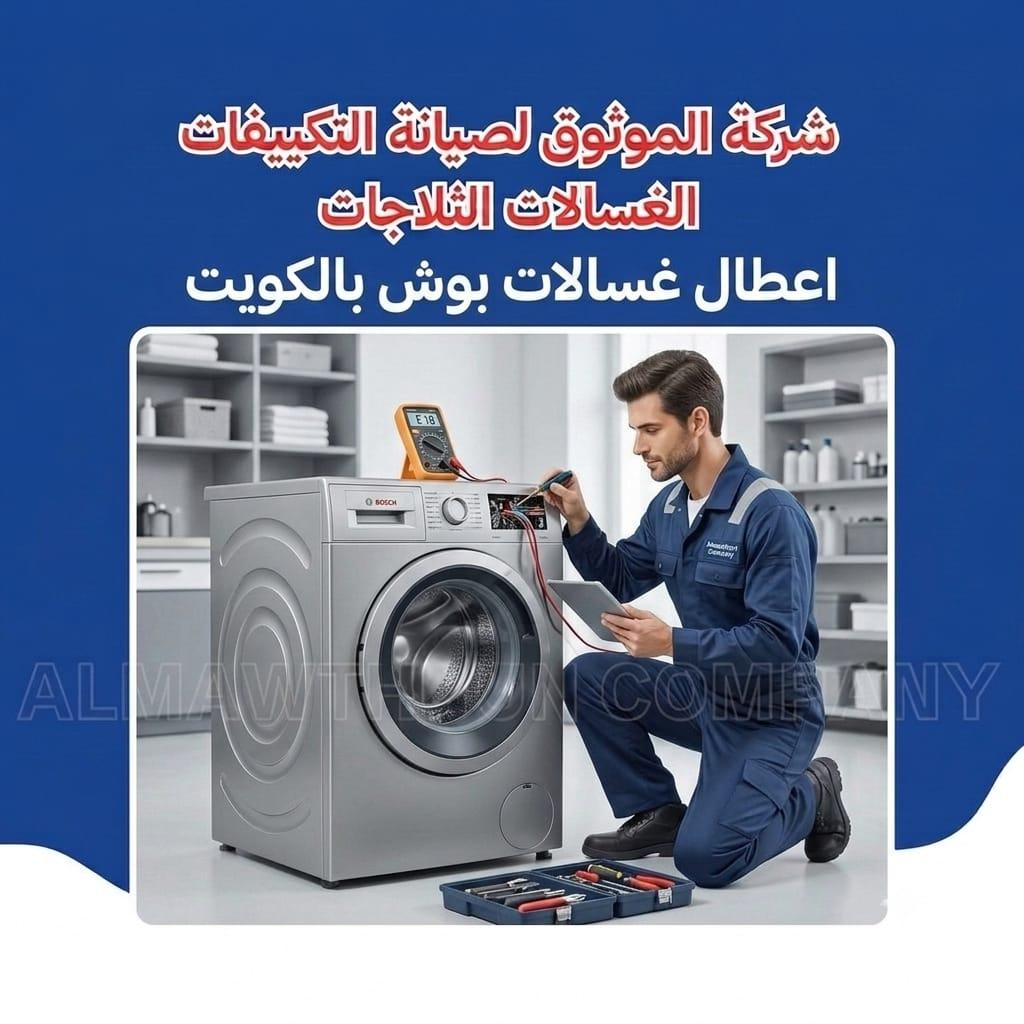
Checking the Bosch washing machine control board should come after the more direct causes of the symptom have been investigated because the control board is important, but it should not become the first suspect in every fault. Many customers hear that “the board is damaged” simply because the washer does not start or stops in the middle of a program. However, the same symptoms can come from the door lock, a sensor, the pump, power supply, or another operating condition. A professional technician should only focus on the control board when there is a logical reason to do so.
The inspection begins by confirming that the board is receiving the correct power supply and that important signals from other components are reasonable. If the door lock is not providing the correct status or a sensor is sending an inaccurate reading, the board may behave in a way that looks faulty even though it is only responding to incorrect information. An external component drawing abnormal current or creating an electrical short can also affect operation. That is why the control board should always be tested as part of the whole system rather than as an isolated component.
The technician may inspect for obvious physical signs such as burning or damage, but diagnosis should not depend only on appearance. A board can look normal while having a functional fault, and visible discoloration or marks do not always prove that the board is the original cause. Measurements and command tracking are more important than visual inspection alone. If board repair or replacement is suggested, the technician should clearly explain which signal or control function failed and how the other possible causes were ruled out.
From a cost perspective, the control board is one of the parts that should be confirmed carefully before replacement because changing it as an experiment can be expensive. The diagnostic standard here should therefore be stronger than for a simple low-cost component.
-
Control-board inspection should come after the door lock sensors pump and power supply have been considered according to the symptom because faults in those areas can imitate a control problem
-
Visual appearance alone is not enough because some board faults are functional and show no obvious burning while some visible marks may not be the true cause
-
Ask which command or signal failed before approving control-board replacement because an expensive component should require stronger diagnostic evidence
-
If the board is repaired or replaced several stages of the cycle should be tested because successful startup alone does not prove that all control functions are working normally again
Testing the Bosch Drain Pump
Testing the Bosch drain pump begins by determining whether the problem is actually in the pump or somewhere else in the water path. If the washer remains full of water or drains slowly, the first checks should include the drain hose and any user-accessible filter or drainage area depending on the model. A small object, lint buildup, or a compressed hose can create the same symptoms as a weak pump. That is why the pump should never be replaced simply because water failed to leave the drum.
Once the water path has been checked, the technician should observe whether the pump operates during the drainage stage. If the pump can be heard but the water does not move, the technician should consider either a blockage or weak pumping performance. If there is no sound, the next step is confirming whether the pump is actually receiving an operating command. This creates an important distinction between “the pump does not run” and “the pump is not being told to run.” The visible result may be identical, but the responsible component is not.
Pump testing should also include drainage speed. A pump may technically run but work so slowly that the cycle becomes longer or the washer refuses to spin. The test therefore should not be limited to listening for a sound. The technician should confirm that the tub empties within an appropriate time and that the washer then moves naturally into the next stage. If the real problem is simply an obstruction, cleaning the drainage path may be enough without replacing any part.
After repair, a real drainage stage should be run and both water removal and program progression should be observed. Success means the water leaves consistently and the washer completes the cycle without stopping or repeated attempts.
-
The drainage path should be checked before the pump because a blockage or compressed hose can create the same visible symptoms as pump failure
-
Pump sound alone does not prove the component is healthy because it may run while still being unable to move enough water
-
The absence of pump sound does not prove the pump itself is faulty until the technician confirms that the operating command is actually reaching it
-
After repair drainage speed and movement into the spin stage should be tested because pump performance is measured by the result rather than by the sound
Identifying the Cause of a Bosch Washing Machine Fault
Identifying the cause of a Bosch washing machine fault is the stage where all previous observations and tests are brought together into one clear decision. The technician should not rely on one isolated test. Instead, the symptoms should be connected with the cycle sequence and the results of door-lock, sensor, motor, pump, and control testing depending on the specific problem. The objective is to find one cause that explains as many of the observed signs as possible rather than choosing a component that explains only one symptom.
For example, if the washer does not spin and water also remains inside, the strongest diagnosis is usually the one that explains both symptoms together. A drainage problem can explain why the water remains and why the washer never reaches proper spinning. Replacing the motor without correcting drainage would leave the original problem unresolved. This method of connecting symptoms significantly reduces diagnostic errors.
The technician should also distinguish between the primary cause and secondary effects. A loud sound may result from poor balance rather than being a separate mechanical fault. A long cycle may be caused by slow filling rather than a control-board problem. The more accurately the technician identifies the original problem instead of chasing every symptom independently, the clearer and less expensive the repair becomes.
The final diagnosis should always be testable after repair. If the pump was identified as the cause, drainage should return to normal and spinning should follow correctly. If the door lock was the cause, the washer should start properly and release the door normally at the end. Correct diagnosis proves itself through a clear result rather than merely through replacement of a component.
-
The correct cause should explain as many symptoms as possible instead of focusing on one sign while leaving other problems unexplained
-
The technician should separate the primary cause from secondary effects because some noises delays or performance changes may be consequences rather than independent faults
-
Connecting symptoms with actual test results reduces the need to replace several components during the same visit without clear justification
-
After repair the original symptom and the affected operating stage should return to normal because the final result is the practical test of whether the diagnosis was correct
Technician Steps for Diagnosing a Bosch Washing Machine
The steps a technician uses to diagnose a Bosch washing machine should normally follow an organized sequence: gather information, inspect external conditions, operate the appliance, observe the cycle, and then move into specialized testing based on what appears. This order matters because every step should be built on the result of the previous one. A good technician does not test the motor, sensor, control board, and pump all at once. Priorities are selected according to the symptom.
The first stage is understanding the problem and its history. Next come visible connections, hoses, the door, and other installation factors, followed by a safe operating test. The technician then identifies the failing stage: startup, filling, movement, drainage, spinning, or door release. Once that stage is clear, the diagnostic area becomes much smaller. If the fault involves drainage, the water path and pump receive attention. If the washer will not start, the door lock, power supply, and control conditions become more relevant. If the problem is movement, the technician first confirms that all conditions for rotation are met and then inspects the motor system and related components.
After the tests are complete, the technician combines the results and identifies the strongest cause. The customer should then receive a clear explanation of what was tested and what was ruled out. Repair should begin only after approval. Once the work is complete, the final step is retesting. This is extremely important because it confirms whether the diagnosis was actually correct. It is not enough to say, “We replaced the part.” The washing machine must successfully perform the function that previously failed.
This organized method makes the service clearer for the customer and far less dependent on luck. Every step has a reason and every repair decision has supporting evidence. That is the difference between a technician who diagnoses and one who simply experiments.
-
Diagnosis should begin with information and observation before measurements because understanding the symptom determines which technical test is worth performing
-
The inspection should narrow down according to the stage that fails instead of checking every component in the washing machine without a logical order
-
Once the results are collected the technician should explain the cause and available options before repair because the customer should understand why the proposed work is necessary
-
The final step should always be testing the failed function after repair because normal cycle operation is the practical proof that the diagnosis was correct
Conclusion
Professional Bosch washing machine maintenance is not about how quickly a technician can replace parts. It is about how carefully the diagnosis is organized. The technician begins with the symptoms and the sequence of the cycle, then rules out possible causes one by one and tests the component closest to the actual problem. This approach prevents a drainage fault from being mistaken for a motor problem, a door-lock issue from being blamed on the control board, or an error code from automatically becoming a replacement part without proper testing.
If you need Bosch washing machine maintenance, choose a technician who can clearly explain what was inspected, what was ruled out, and what was confirmed before repair begins. The more evidence there is behind the decision, the lower the chance of replacing a healthy part or paying unnecessary costs. Testing after repair is just as important as diagnosis because the real measure of a successful service is not the name of the new component but the washing machine returning to its normal cycle with stable operation.
Frequently Asked Questions
Does a Bosch washing machine error code identify the faulty part directly?
Not always. An error code usually points toward a function or diagnostic direction, but the actual cause may involve more than one component connected to the same function. The technician should connect the code with washer behavior and test results before deciding to replace anything.
Does the technician always need to test the motor if the washer does not spin?
Not necessarily at the beginning. Drainage, load balance, door locking, and program sequence should be checked first. If all of those conditions are normal and spinning still fails, then motor testing becomes more justified.
How do I know the control board was actually tested instead of guessed?
The technician should be able to explain which command or signal failed and how the door lock, sensors, pump, or power supply were ruled out depending on the fault. Simply saying “the control board is bad” without testing is not a complete diagnosis.
Should the Bosch drain pump be replaced whenever the washer does not drain?
No. The drain hose, filter, and water path should be checked first, followed by confirming pump response and whether an operating command reaches it. Sometimes the real problem is only a blockage and no replacement is needed.
What is the most important step after repairing a Bosch washing machine?
The same stage that previously failed should be tested again. If the problem was drainage, the washer must drain properly. If the problem was the door lock, the cycle should start and the door should release normally at the end. That final test confirms whether both the diagnosis and the repair were correct.